02022-07-14 | Photography
Street Photographer Matt Stuart’s Incredibly Serendipitous Images Collected in a New Book | Colossal:
Armed with his Leica and an extraordinary amount of patience, Matt Stuart ventures through the streets of cities worldwide to capture the unexpected and coincidental moments of everyday life. His practice revolves around finding humor, play, and serendipity in the mundane, a skill he’s cultivated throughout his 25-year career and recounts in the recently released volume Think Like a Street Photographer.
Click on the above link and enjoy some of his photographs.
I imagine I would be hopelessly bad at Street Photography because I don’t react that quickly. I want to consider angles and usually take time to frame a subject. Nevertheless, it would be a really good practice for me to try this.
02022-07-14 | Art, Music, Reading
Ai Weiwei unveils cage-like Arch installation in Stockholm:
Appearing to break through the steel bars that surround them, these characters represent the “free passage of all populations, and appealing for a world without borders,” said creative foundation Brilliant Minds, which organized the installation.
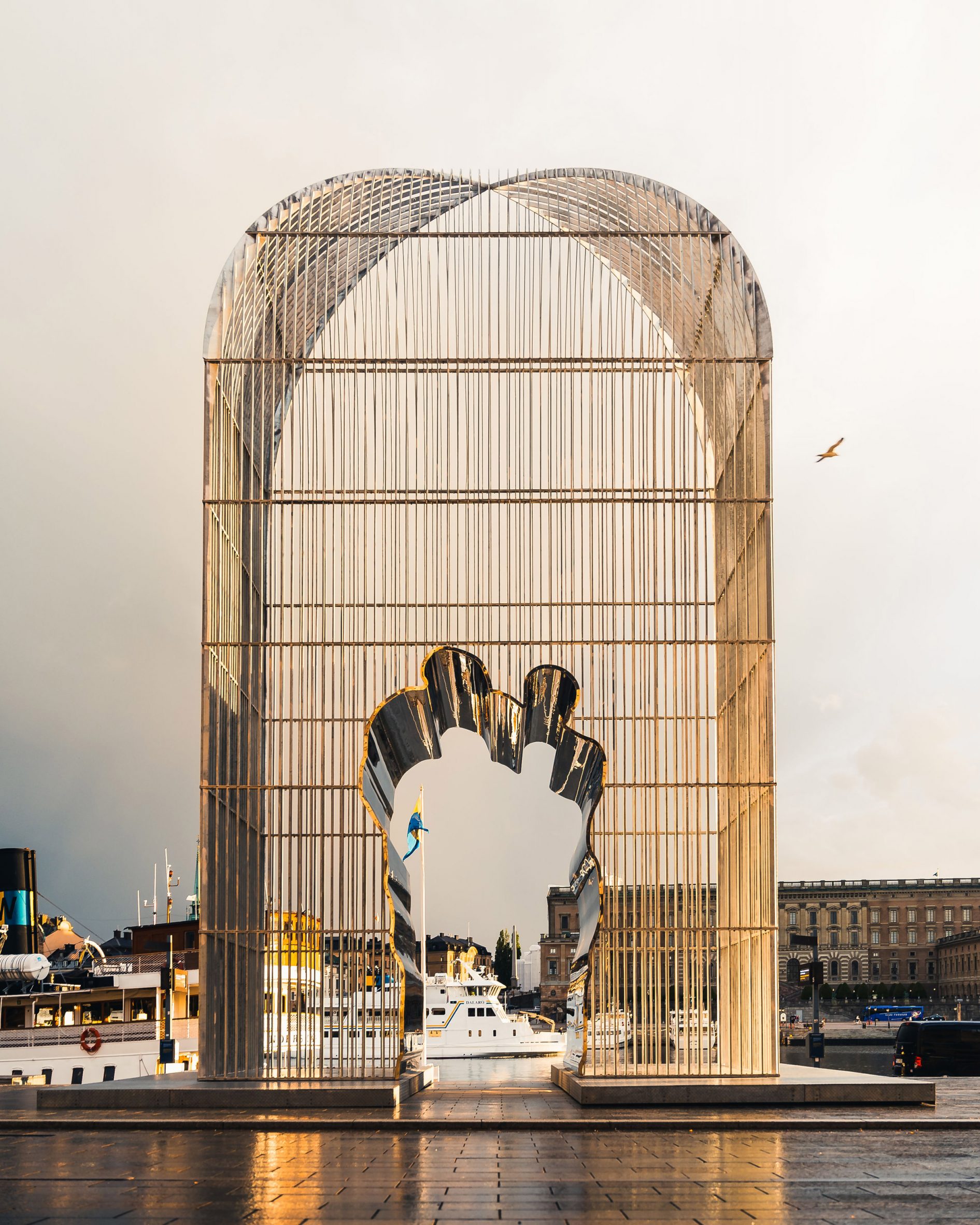
This is a beautiful sculpture by Ai Weiwei. The foundation Brilliant Minds was created by the man who became unfathomably rich by founding first Pirate Bay and later Spotify. Someone should put a sticker on the Arch that says paid for by musicians everywhere.
I am reading Ai’s book “1000 Years of Joys and Sorrows”. For me the book became really interesting after he arrived in New York, in February of 1981.
There were tens of thousands of artists in New York, but only a few dozen who were making money. For a certain subset, art had become a
target of speculation and just part of the race to find the next new thing.
Art had long been a consumption commodity, a decoration catering to the
tastes of the rich, and under commercial pressures it was bound
degenerate. As artworks rise in monetary value, their spiritual dimension
declines, and art is reduced to little more than an investment asset, a
financial product.
and
Around this same time, a couple of pictures of mine were part of a group exhibition in the East Village. When the show closed, rather than take the pictures home with me, I just chucked them into a dumpster. Dumpsters are everywhere in the streets of New York City, and you could probably find a number of masterpieces in them. I must have moved about ten times during my years in New York, and artworks were the first things I threw away. I had pride in these works, of course, but once I’d finished them, my friendship with them had ended. I didn’t owe them and they didn’t owe me, and I would have been more embarrassed to see them again than I would have been to run into an old lover. If they were not going to behanging on someone else’s wall, they didn’t count as anything at all.
I highly recommend the book.
02022-07-13 | Lx, Photos, Portugal, Writing
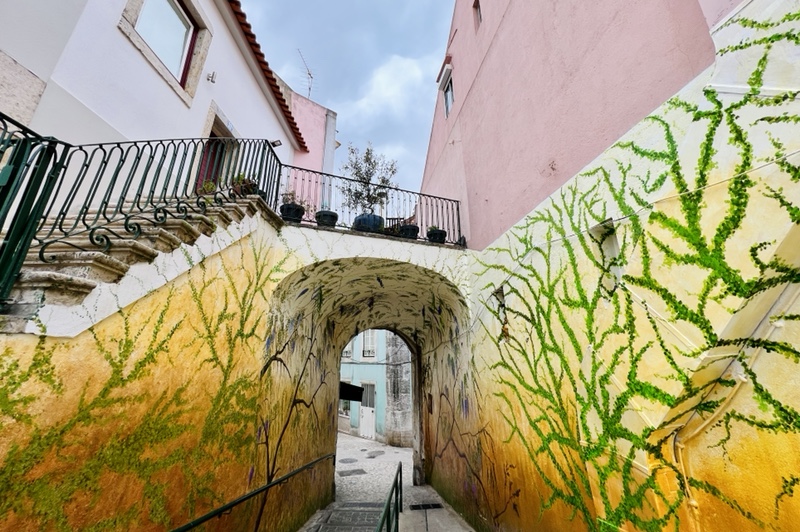
We want a terrace. Sure, don’t we all want a terrace! Yeah, but how about we build one between our two houses? That’s a pretty good idea. Will it have access from both houses? Nope, only from our house. Then how do I use the terrace? You basically don’t, but we could add stairs to the terrace that you could sometimes use. Great, so I can enjoy the view from the terrace as well. Can we have dinner on the terrace? Well, here is the thing. I am willing to add the stairs, but I will also add a gate… so you won’t be able to go to the terrace any time you want. You want that I ask you every time I want to use the terrace. Yeah, I do. It really doesn’t sound like a great deal for me. You get a terrace and what do we get? Well, how about I pay you to paint the underpass underneath the terrace? You can paint it any way you want. You are not going to tell me what to do? No. Paint anything you like. You are paying for the building of the terrace and you will pay me to paint it. No, only underneath the terrace. But there you can paint anything you like. Let me think about this.
02022-07-13 | Coffee, Portugal
“Empurre ou puxe” — which one of those words means push and which one pull? I have noticed a lot of confusion around these two words, especially since “puxe” is pronounced “push-eh”. As you might have guessed “empurre” means push and “puxe” means pull. So, if you stand in front of a door that you are trying to push open and a Portuguese person behind you helpfully says “puxe”, don’t push even harder because they are actually telling you to pull.
The Portuguese have a couple of extra snack meals, which will suit some people I know. :-) There’s one in the late morning, called “lanche da manhã” and one in mid afternoon, “lanche da tarde”. Each meal is usually accompanied by coffee. People drink a lot of coffee here and it is almost always espresso. In Lisbon a café, or espresso, is also called “bica”. Some people think that bica could be an acronym for “Beba Isto Com Açucar” – drink this with sugar – but I don’t believe it. I also learned that in Porto the same coffee is called “cimbalino”. Interestingly bica is feminine while cimbalino is masculine.
“Bico” (masculine) means spout. An espresso machine has little spouts out of which the coffee flows. That could be the origin of “Bica”? That which comes out of the coffee spout…
02022-07-13 | Ideas, Lx, Philosophy

This is related to my recent post Rituals, Customs and Sentiments.
For a moment let’s pause all arguments for or against a higher power of any kind. What is left then are actionable techniques that work. They work because humans have experimented with them for millennia. Here is a quick list I wrote down while sitting in a park, under these marvelous Stony Pine trees… It’s an incomplete list, I am sure, but there is a lot here that could be taught to people of any or no faith.
-
- practice
- meditation
- prayer *
- yoga
- training compassion
- service
- feeding hungry
- attending to ailing
- cleaning
- cooking
- ceremony or rituals
- lighting incense
- lighting a candle
- fasting
- wearing special clothes, robes, or covering head
- gratefulness
- meal prayer/giving thanks for food
- daily reflection/giving thanks for people/situations
- movement, esp. synchronized or done in a group
- dancing
- tai-chi in the park
- bowing
- gestures
- music!
- singing together, hymns
- karaoke?
- listening to music (Bach on a church organ!)
- chanting
- architecture
- sacred buildings
- sound!
- scale!
- libraries?
* I think that prayer can be a practice and is not limited to communicating to a higher power. A prayer can be the focusing of one’s attention. It can be an expression of gratitude and thanks. It can state one’s intent.

