Ultra Wide


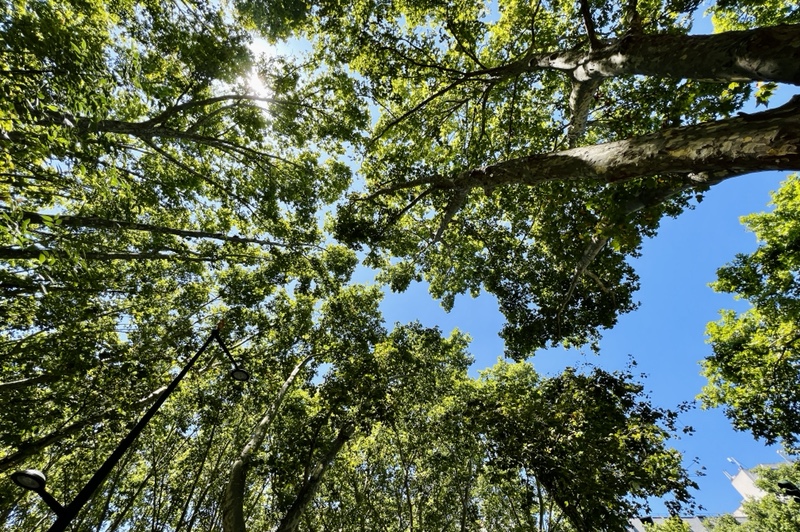


I enjoy using the ultra-wide lens a lot more than I expected.

I enjoy using the ultra-wide lens a lot more than I expected.
Venice is cursed. I walked cursed Venice in a cloud of confusion. Why did so many people bring so many roller suitcases? Did they not know they were coming to Venice? Did they not know Venice has a stone-stepped bridge every fifty yards? Sweat soaked beneath the savage sun, they heaved their suitcases — all of which were big enough to hide a dismembered body or two — up and down and huffed and seemed distraught at the amount of heaving required to make headway.
Walking Venice — Ridgeline issue 144
This opening paragraph from Craig Mod’s very enjoyable Ridgeline Newsletter could have been written about Lisbon as well. One hears them from afar, the tourists’ suitcases clattering up or down steep cobblestone streets, their wheels squealing from the abuse while the people get the workout of their lives. Mod calls this noise the Rimowa Thunderdome.
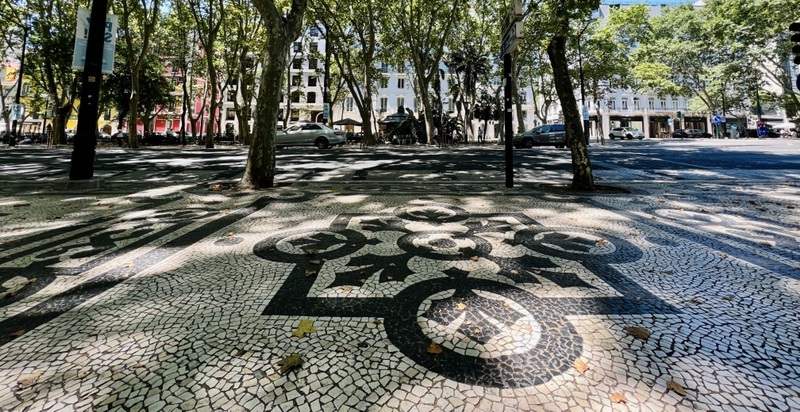
Some cities have cobblestone streets while the sidewalks are concrete or asphalt or otherwise fairly smooth. Not Lisbon. Here many sidewalks are made from a different color cobblestone, a smooth beige stone that becomes super treacherous when it rains. I am still experimenting with different pairs of shoes, hoping to find some that offer enough grip during a rain shower, so as not to break a leg. The experience of walking on snow in Santa Fe for thirty years gave my body the very useful ability to react to a slipping foot without going down. So far so good.
What’s the ideal baggage for travel? I don’t think there is one right way. Jon is in the duffel camp and has carried a Tumi duffel for at least two decades. It’s traveled all over the world and has been repaired several times. I used to be a duffel man but a few years ago I switched to a suitcase. There are times when it is so much easier to push a suitcase with one hand (those wheels have become really great, haven’t they!), with my backpack riding on top of the suitcase and the guitar case slung over the other shoulder, while Jon carries his bass case (not exactly light!) in one hand and the Tumi in the other. But arrive at a cobblestone street and he is the one smiling while I have to put the backpack on my back, hold on to the slipping shoulder strap of the guitar case, and drag the suitcase along pitifully.
A few things I have learned:
Even if a company replaces the broken suitcase, as they did with mine after the frame got bent, it would no longer lock properly, and a wheel came off, it’s a waste of materials and not a good solution.
Back to the clattering suitcases on cobblestone streets and sidewalks… Take heed and don’t start your journey with a long and exhausting and noisy nightmare of a walk.
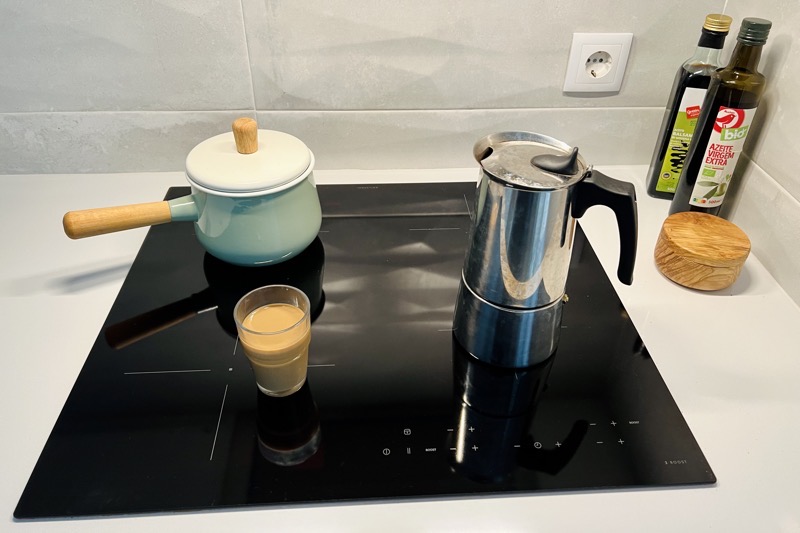
One of the first items I aquired for the flat in Lx was a Moka pot. While I love the original Moka pot design, I don’t like heating water in aluminum and besides, an aluminum pot wouldn’t work with this induction stove. Instead I found this stainless steel version at El Corte Ingles.
The original Moka pot was invented by the Italian engineer Alfonso Bialetti in 1933. Some call it a stovetop espresso maker although the pressure never comes close to that of an espresso machine – it creates 1-2 bar of pressure as opposed to 9 bar of a machine. (Wikipedia Link)
I wondered why it’s called a Moka pot and discovered its connection to a city in Yemen.
Wikipedia has the knowledge:
Mocha was the major marketplace for coffee (Coffea arabica) from the 15th century until the early 18th century. Even after other sources of coffee were found, Mocha beans (also called Sanani or Mocha Sanani beans, meaning from Sana’a) continued to be prized for their distinctive flavor—and remain so even today. The coffee itself did not grow in Mocha, but was transported from places inland to the port in Mocha, where it was shipped abroad. Mocha’s coffee legacy is reflected in the name of the mocha latte and the Moka pot coffee maker. In Germany, traditional Turkish coffee is known as Mokka.
The cover of the next album might be an image that includes movement, especially because the album will contain many sounds of rain and water. A few of the working titles are:
Yes, I am obsessed with water. Many of my song titles have a variation of the word water in them. One cannot live in a desert, even one as relatively green as Santa Fe, without obsessing about water. (((maybe I should make a playlist with every song that has either water in the title or the sound of water on the recording… there will be loads…)))
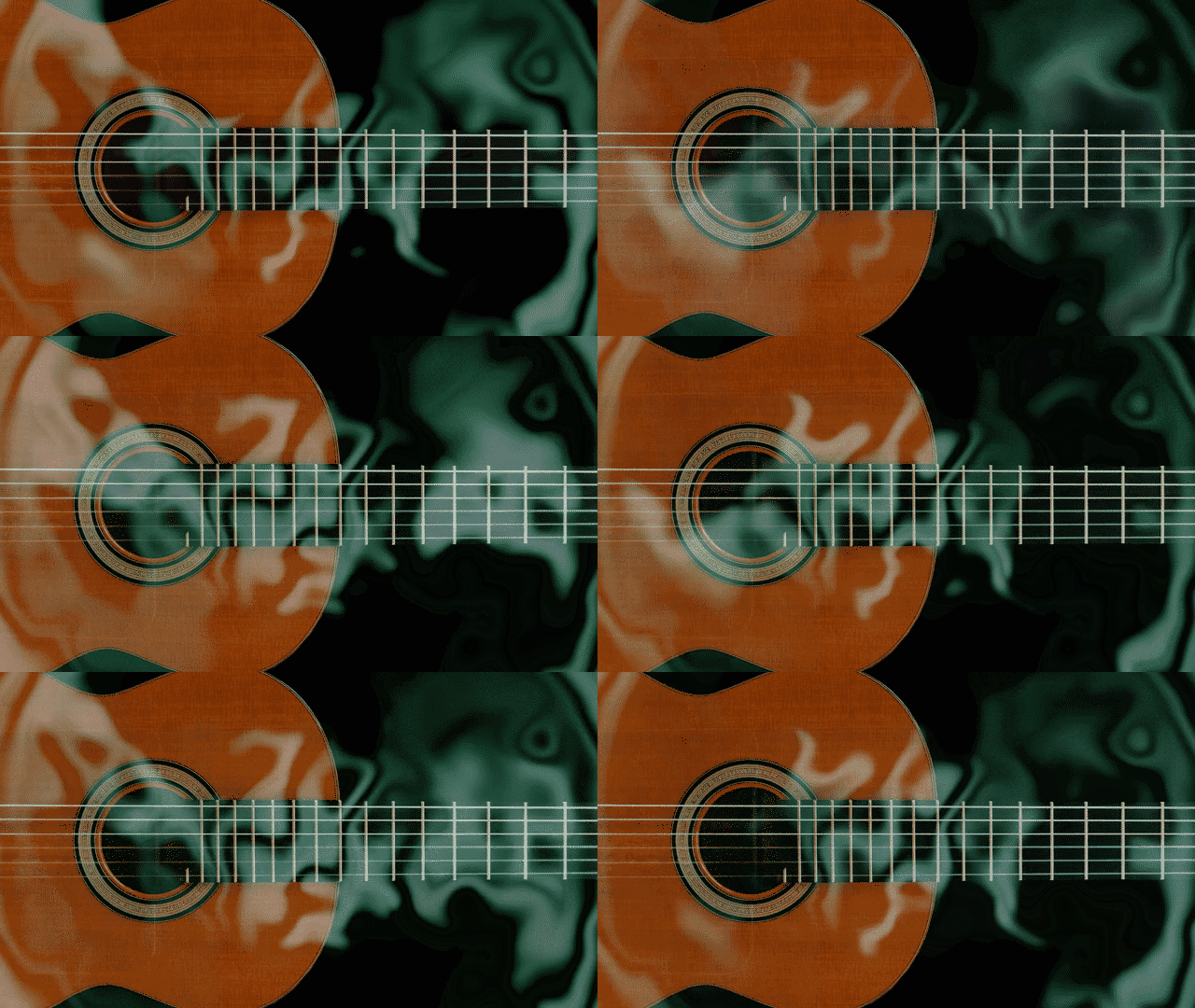
A printed CD cover is always static but there is no reason that a digital file has to be. There are so many possibilities for a cover that combines a short video loop in the background with a foreground image that has the opacity turned down a little bit. I imagine an image of a guitar layered over a video loop that shows the reflections of the sun in a body of water. Or a macro photo of a drop of water that is layered over water movement. There are lots of possabilities there.
This is a quick Saturday morning experiment, using a photo I took last week and a short loop I found at freestockfootagearchive.com.
Above is the video and below is a 6 second GIF version, taken from that video.