Plastic Flowers and Graffiti


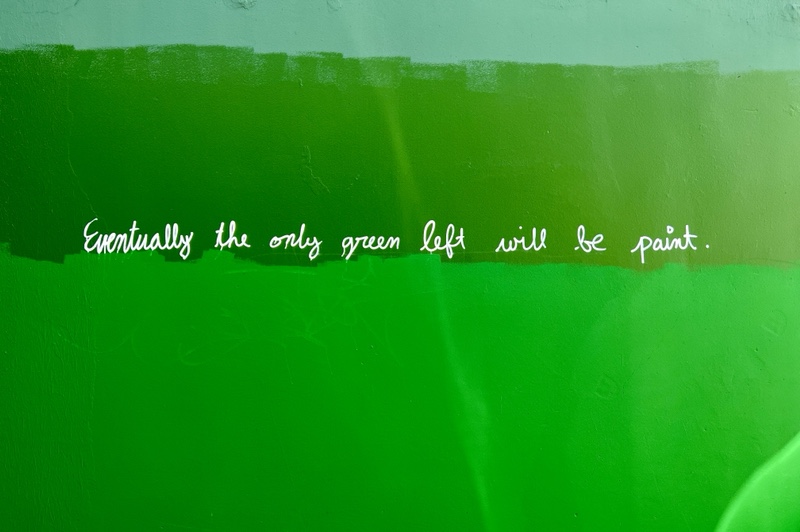
I posted that photo to Twitter and added the following:
I think we tend to believe the (false) story about the frog, who boils to death because he can’t decide when it’s too hot, because that’s us, that’s human nature.
It feels like everyone is waiting for a signal. “I don’t want to change if others don’t. I think they will find a technological solution. It’s not so bad.”
The wealthy, corporations and individuals, want to make a little more money, buy more acres in NZ. When asked how much 💰 was enough Rockefeller replied “just a little more”.
See also The Bystander Effect and The Abilene Paradox.
Yesterday we played the first of six shows at Jazz Alley in Seattle. As I remembered from a previous series at the club, the audience was great and the three of us enjoyed the performance. This morning I took a long walk around the neighborhood where we are staying.

We know why we crave sugar, salt, and fat. All three are relatively hard to obtain in nature and so humans have a great appetite for it. The craving is built into our genetic makeup. Sugar came in the form of fruits, fat in the form of nuts or meats, and salt was even harder to obtain, depending on where one lived.
We have had virtually unlimited access to sugar, salt, and fat only for a very short time – relative to how long humans have been around. Our bodies still crave it even though we now get too much of it. Genetics don’t change that quickly.
It seems to me that we also have a built in craving for data or information. Information was a precious commodity until recently. For our foraging ancestors, information gleaned from a scout, or a stranger, about the location of a clear brook or a natural bridge across a river, or a shortcut through a landscape, was very very useful. For millennia human curiosity thrived on data like that. Until the trickle of information became a landslide, an avalanche, a wave ten stories high.
The amount of data that the average person consumes each day is equal to reading more than 200 newspapers. Each. And. Every. Day. Perhaps our system can’t handle that and, like getting too much sugar, salt or fat, we get overloaded. Data does to the brain what sugar does to the body.
